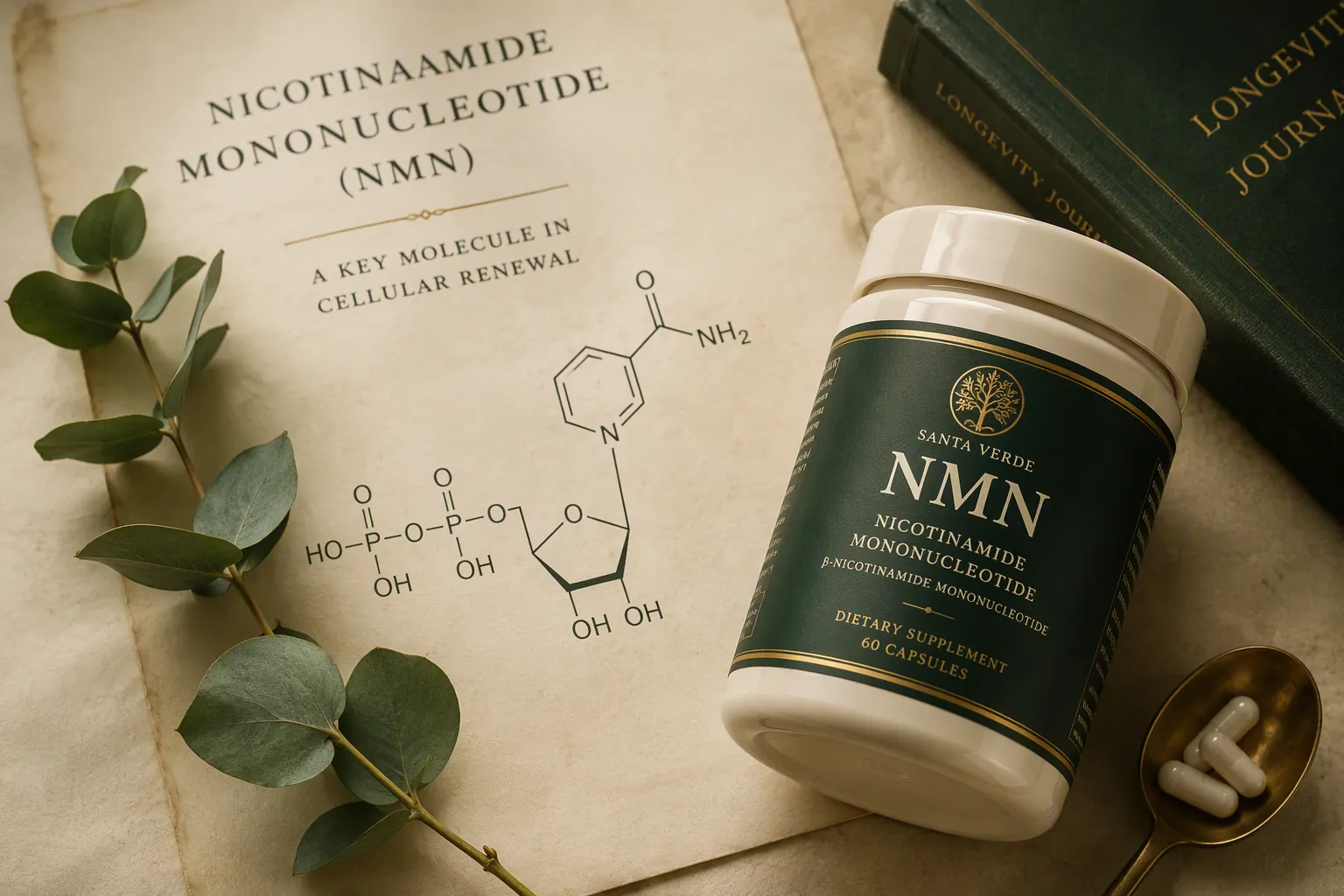
Before you put any molecule in your body daily for years, "is it safe?" is the right question — and with NMN it deserves a careful, non-cheerleading answer. Here it is.
The human safety record
NMN is not foreign to your biology — your cells synthesize it from vitamin B3 right now, and it occurs naturally in small amounts in common foods. Supplementation scales up a native molecule rather than introducing a novel drug.
Human clinical trials — randomized, placebo-controlled — have administered NMN at 250–1,200 mg/day (and up to 2,000 mg/day in short-term safety work) with a consistent result: no serious adverse events attributed to NMN, and no clinically meaningful changes in blood panels, liver enzymes, or kidney markers versus placebo. Trials in older adults, prediabetic women, and recreational athletes all report the same tolerability picture.
Regulators have taken note. In late 2025 the U.S. FDA confirmed NMN is not excluded from the dietary-supplement definition, and in 2026 EFSA issued a favorable safety opinion for ≥99%-pure β-NMN up to 300 mg/day. Neither is an endorsement of benefit claims — both are meaningful safety signals.
Reported side effects
They are uncommon and mild, and mostly reported anecdotally rather than in trials:
- Digestive upset (nausea, loose stool) — usually at higher doses or on a very empty stomach; typically resolved by taking NMN with food or stepping the dose up gradually.
- Alertness / lighter sleep when dosed late in the day — move the dose to the morning.
- Mild headache or flushing in a small number of first-week users — generally transient.
Who should avoid NMN (or clear it first)
- Pregnant or breastfeeding women — no safety data; EFSA's opinion explicitly excludes this group. Skip it.
- Children and adolescents — NAD⁺ systems are not in age-related decline; no rationale or pediatric data.
- Anyone undergoing active cancer treatment or with a complex medical condition — NAD⁺ metabolism intersects with cell-proliferation pathways; this is a decision for your oncologist/physician, not a blog post.
- Anyone on prescription medication — formal interaction data is limited; a five-minute conversation with your doctor is cheap insurance.
Important: This article is information, not medical advice. Supplements are not intended to diagnose, treat, cure, or prevent any disease. Consult your physician before starting NMN.
Regulatory status, briefly
NMN's U.S. status had a turbulent patch — a 2022 FDA position briefly clouded its supplement eligibility — which resolved in 2025 when the agency confirmed NMN is not excluded from the supplement definition. Japan has long sold NMN as a food ingredient; the EU's 2026 EFSA opinion moved it toward novel-food acceptance. The direction of travel globally is toward normalization with quality standards attached.
The quality problem — the real safety issue
Here's the uncomfortable truth: the biggest documented risk in the NMN market isn't NMN — it's fake or degraded NMN. Independent marketplace testing has repeatedly found products containing far less than label claim, and some containing none at all. A molecule that isn't there can't help you; a bottle produced without controls can carry contamination risks that have nothing to do with NMN itself.
A genuinely safe purchase checklist:
- Named raw material with traceability — we use Uthever®, the NMN ingredient with the deepest clinical dossier.
- Batch-specific third-party COAs — identity and purity by HPLC, heavy metals, microbials. Ask for the certificate matching your batch; we provide it.
- GMP-certified manufacturing — process controls, not just a clean label.
- Stability protection — NMN degrades with heat and moisture; microencapsulation and proper packaging matter.
Done right, NMN has one of the cleaner safety profiles in the supplement aisle. Done carelessly — anonymous powder, no testing, miracle claims — you're not really buying NMN at all. Every product in our line is built to pass the checklist above, batch after batch.